About Us
Zoya Science Schools: Learning and wellbeing
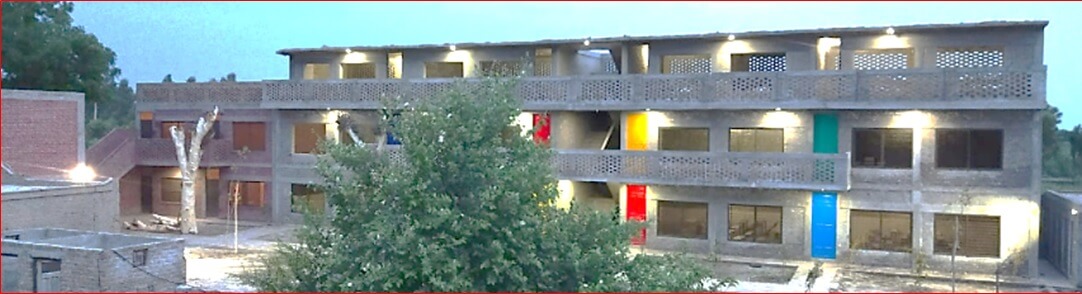
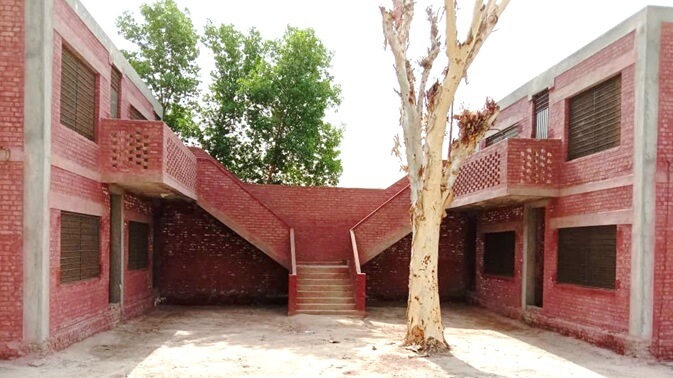
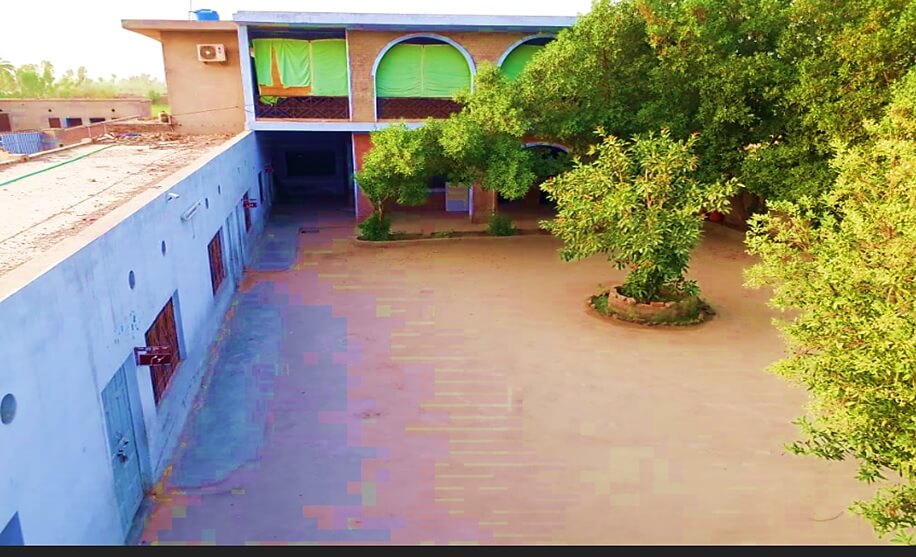
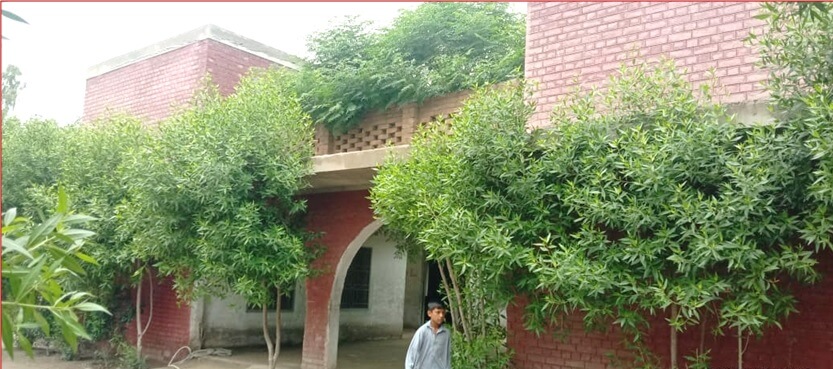
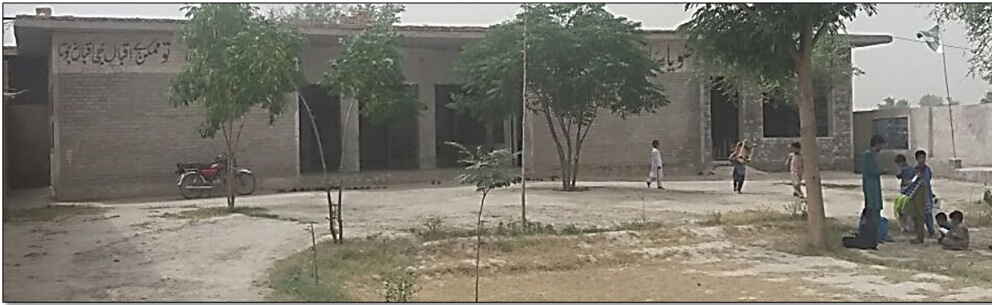
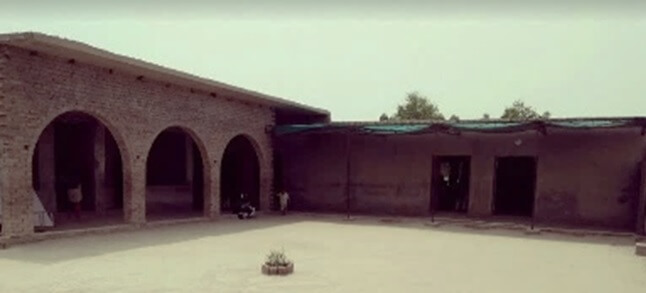
The Zoya Science Schools now serve 3,297 children—112 more than last year (as of August 17, 2025). Built close to scattered clusters of peasant dwellings, separated by wide fields, they are near enough to enable little girls to walk to school. These are places where little else reaches. Yet in our schools, children receive the full spectrum of STEAM education: science, technology, engineering, arts, and mathematics, delivered through hands-on workshops, that spark curiosity, build confidence, and make learning joyful.
Typically, each school is established and supported by the family of Zoya Khawaja and friends, on land donated by the local community, until a sustainable funding source is secured, such as a partnership with the Punjab Education Foundation (PEF). Schools partnering with PEF are independently run by their administrators.
Education and textbooks are free. But many of our children come to school hungry and suffer from waterborne illnesses. That is why improving their health and nutrition is integral to our work. Our welfare effort focuses on three key areas: providing a daily hot meal to children in one school, ensuring access to clean drinking water in their homes, and in government schools, and offering cash/other support.
It is in this context that our STEAM initiative has taken root—bringing structured, hands-on learning into places where formal education is still largely unthinkable.
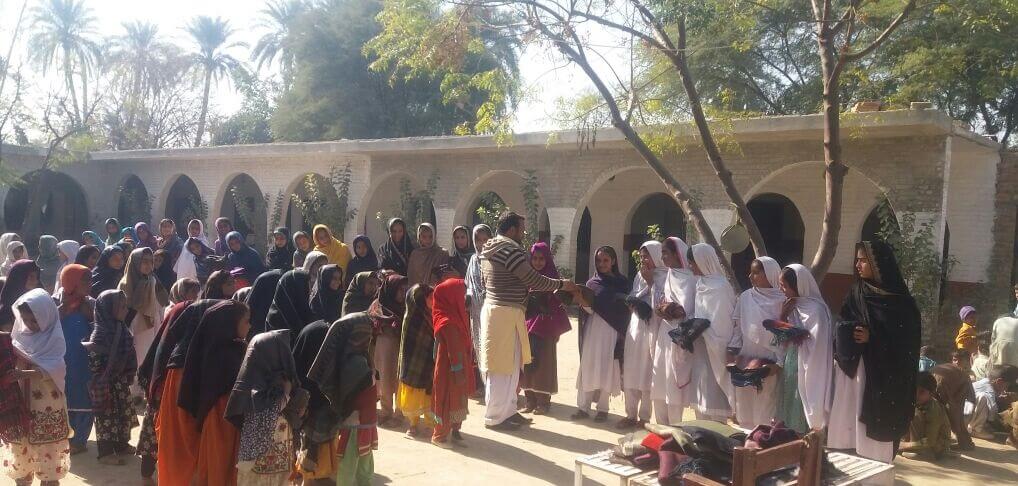
The girls’ excitement, confidence, and teamwork (as in the photos below) speaks louder than any test score.
For us, education is not just mastery of reading and writing. For us, as Paulo Freire writes in Pedagogy of the Oppressed, education must speak to the unrest of those struggling to find their voice. We link literacy with the children’s awareness of the socio-cultural forces shaping their lives—and their capacity to change them. This is the seedbed from which collective action and social transformation can grow.
It also means giving children insight into the basic structures of science and math, and training them to think logically and critically. This, in turn, helps them see through the untruths that uphold an unjust society and sets them on a lifelong path of discovery, self-realization, and the struggle for justice.
Our libraries feature world authors like Hemingway, Tolstoy, Chekhov, Praim Chand, Rumi, Gogol, etc.—alongside Kalam science books and global children’s stories, including the full catalog of the National Book Foundation’s children’s titles.
The schools are the vision of Sarmad Khawaja, whose brief biography follows:
Sarmad Khawaja served at the International Monetary Fund (IMF) from 1994 to 2010, including as Advisor and Resident Representative in Central Asian countries.
Earlier, he worked at the Institute of Social Studies (ISS) in The Hague (1990–1994) as Senior Researcher and Advisor for reforming Pakistan’s national accounts statistics.
He was Visiting Professor at the Norwegian School of Economics and Business Administration, Bergen (1991), a Fulbright Post-Doctoral Fellow at Harvard University (1985–86), and Chief Economist at the Pakistan Institute of Development Economics (1980 to 1989).
He co-authored two books on Pakistan’s economy: External Shocks and Adjustment (Oxford University Press, 1997); Pakistan’s Economy Through the Seventies (PIDE, 1984). He has also published articles in international journals and reports of PIDE, IMF and ISS.
He has published three volumes of the collected works of his great-grandfather Alif Din Nafees, Islam and Tolerance, 2020
and Lessons of My Life by his father, Prof. Khwaja Masud. Ilqa Publications, 2012
His most recent work is Nawan Sij – A Rock Opera for Children (Zoya Schools, 2024).
A number of his op-ed articles in The News highlight our pioneering teaching materials and methods, emphasizing their potential for wider application across schools in Pakistan.
These op-eds may be accessed at this link: https://e.thenews.com.pk/print/writer/sarmad-khawaja
For example, Keeping Children in School (May 14, 2024) addresses Pakistan’s declared education emergency and proposes practical, medium-scale solutions to immediately impact millions of out-of-school children, especially girls in rural areas. Drawing on a decade of experience running Zoya Science Schools along the Indus, the article suggests two urgent interventions: building 6,000 new schools along the river Indus within walking distance of villages to serve at least a million children, and providing daily hot meals and clean drinking water to improve health and learning outcomes. He demonstrates how this is affordable—costing roughly Rs104 billion, a third of the annual profits of just two state enterprises (OGDCL and PPL). The evidence is compelling: when children in Zoya schools received meals and potable water at home, girls’ enrolment soared, absenteeism fell, and dropouts nearly vanished.
Beyond education, the article underscores the social and political stakes of investing along the Indus corridor. These interventions would empower the poorest communities, undermine feudal patronage systems, and supply the literate workforce missing from CPEC’s promise. Khawaja makes a strong economic case: every rupee spent on child nutrition yields Rs16 in return, while educating girls delivers nearly 20% annual returns, higher than most investments. He portrays the challenge as both urgent and achievable, urging policymakers to match words with action: with decisive investment, Pakistan can not only transform education but also shift its political and economic trajectory.
What Makes a Pi Champion (March 3, 2023) celebrates the remarkable achievement of Hafsa Khan, a student of Zoya Science school from a southern Punjab basti who became Pakistan’s national Pi champion. Despite poverty and social resistance to girls’ education, Hafsa excelled thanks to the Zoya Science Schools, which blend rigorous math teaching with creativity, music, history, and local language. The article refutes critics who dismiss Pi competitions as rote memorization, arguing instead that they spark curiosity, connect children to the “celebrity” numbers of mathematics, and embody humanity’s drive to test its limits—just as athletes run marathons or scientists compute trillions of Pi’s digits.
The article stresses that math is about abstraction, best taught by grounding it in history, stories, and cultural connections—from Al-Biruni’s measurement of Earth’s circumference near Pind Dadan Khan, to posters and musicals in Seraiki that link numbers to beauty, art, and civilization. The piece is also a critique of Pakistan’s mainstream schools, which still cling to rote methods and fail to celebrate Pi Day or foster mathematical imagination. By spotlighting Zoya Science Schools’ innovative practices, the article calls on the National Curriculum Council to adopt these models nationwide—turning isolated success stories like Hafsa’s into a broader culture of math learning.
“No child left behind” (November 2023), he sheds light on Pakistan’s alarming educational and nutritional challenges: with 22.8 million out-of-school children, the reality behind the celebratory façade of World Children’s Day is stark. He highlights the inspiring efforts of Zoya Science Schools in south Punjab, where underprivileged children creatively internalize their rights, yet still grapple with systemic hunger and malnutrition—over half surveyed were undernourished. He emphasizes that investments in nutrition can yield an extraordinary return (Rs 16 for every Rs 1), noting that affordable school meals in South Asia (e.g., ~Rs 57 per child daily) have the power to transform attendance and retention rates
E-mail address: Sarmad.Khawaja@gmail.com